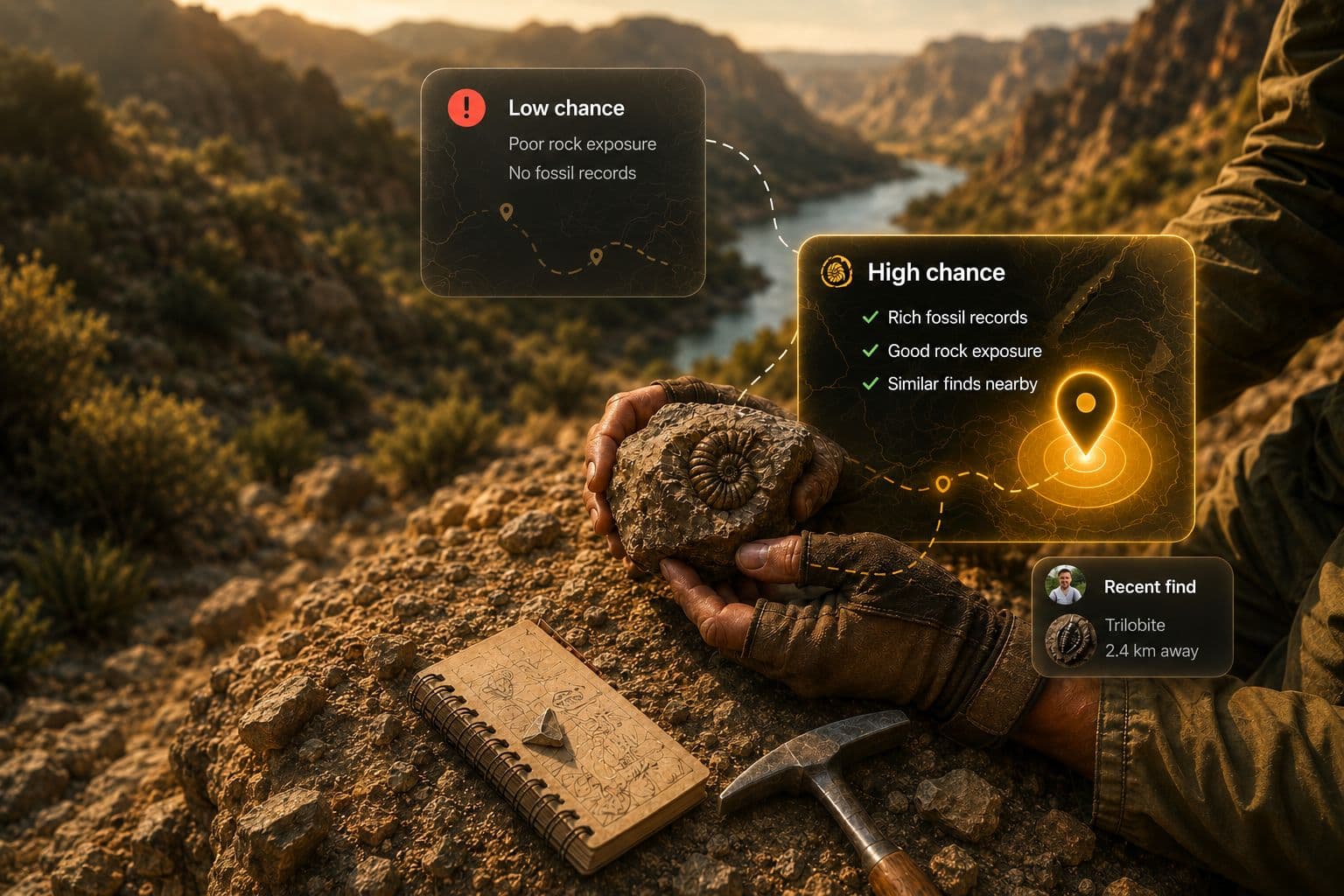

Fossil hunting has a low barrier to entry: no license, minimal gear, and productive sites within a short drive of most places. The path in is short if you follow it in order.
1. Learn to spot the right rock
Fossils only occur in sedimentary rock — limestone, shale, sandstone, mudstone — because it forms from settled sediment that can bury and preserve a body before it decays. Igneous and metamorphic rock destroy fossils rather than preserve them. See what rocks should I look for when fossil hunting for how to recognise the difference in the field.
2. Find a nearby site
Coastal cliffs, river cuts, quarries, and road cuts expose the layers you need. FossilRadar maps sedimentary formations around your location and ranks nearby areas by fossil potential, so you are not guessing. Our fossil hunting near me guide covers finding legal, accessible spots specifically.
3. Get the minimum gear
Sturdy boots, safety glasses, a hand lens, and something to wrap finds in will cover a first trip. A hammer and chisel matter once you are working solid rock rather than picking loose material off scree. Full breakdown in fossil hunter gear.
4. Check the rules before you dig
Permission and legality depend on who owns the land, not on the fossil itself. Private land needs the owner's consent; public land varies by country and agency, and vertebrate fossils are usually more restricted than shells or plant material. Confirm this before you collect anything, not after.
5. Go out after the ground has moved
Fresh erosion from storms, heavy rain, or winter frost uncovers material that was buried the week before. Coastal sites are best on a falling tide, and low-angle morning light makes surface fossils far easier to spot.
6. Start with what beginners actually find
Shells, ammonites, shark teeth, and crinoid stems are common and usually lie loose in scree. Dinosaur bone is rare and often protected — do not plan a first trip around finding one. What fossils should beginners collect has the realistic list.
Hobby or career
Most people who get into fossil hunting stay hobbyists, and that is a complete and satisfying way to do it. If the career question is on your mind too, is fossil hunting a real job covers where the paid paths actually are.