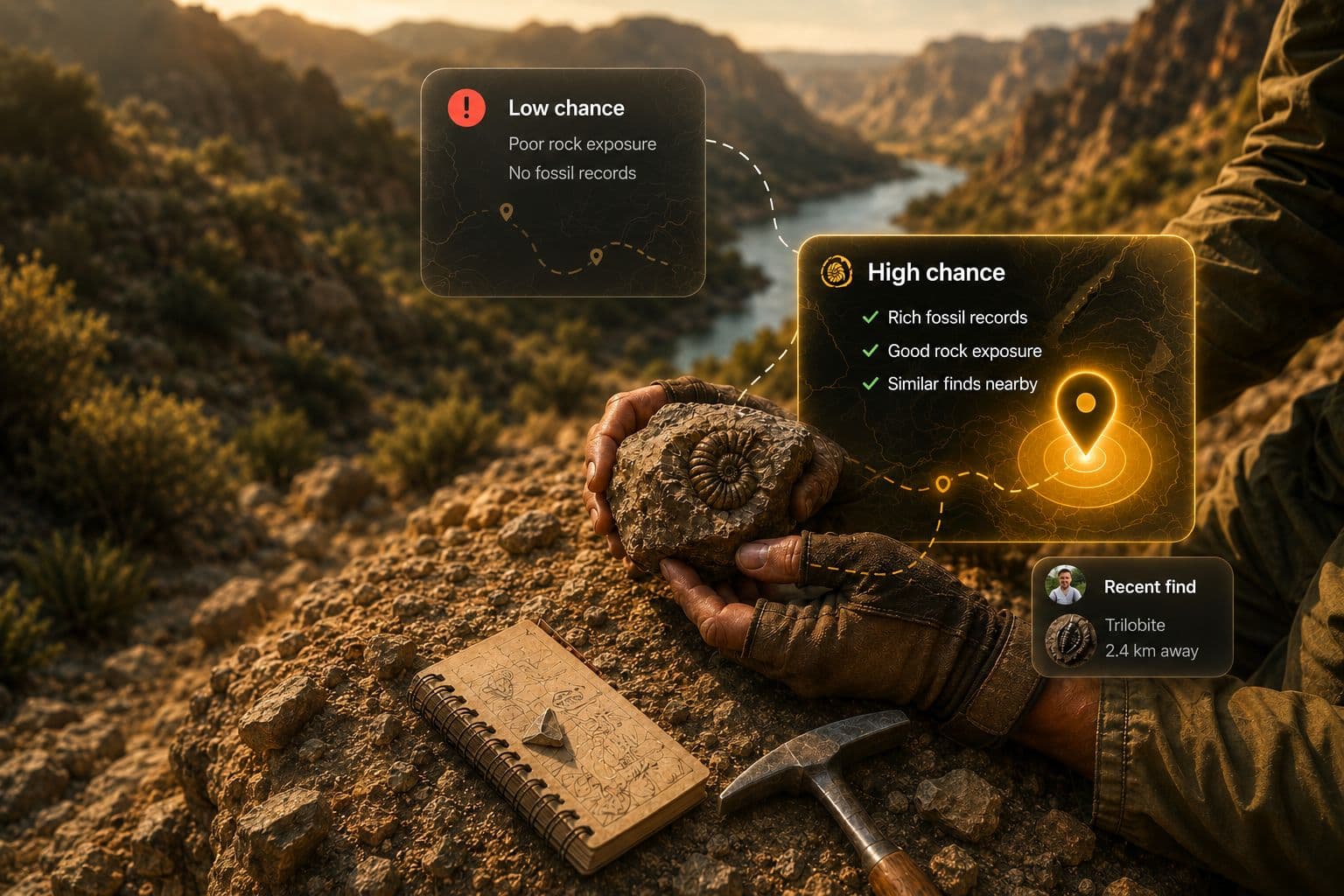
Realistic expectations make fossil hunting more satisfying, not less. Beginners find the same handful of fossil groups again and again, and that is normal rather than disappointing.
The common finds
- Shells and brachiopods — abundant in most marine sedimentary formations and often lying loose in scree.
- Ammonites — recognisable coiled shells found in Mesozoic mudstones and limestones, ranging from coin-sized to dinner-plate-sized.
- Shark teeth — durable, common in certain marine deposits, and identifiable even as isolated finds.
- Crinoid stems — the small disc-shaped segments of ancient "sea lily" stalks, often found scattered rather than as a complete animal.
- Trilobite fragments — cephalons and pygidia are more common finds than a complete trilobite, and still valid, identifiable specimens. See trilobites 101 for what to look for.
- Plant impressions — leaves and stems preserved as flattened carbon impressions in shale, common in certain coal-associated formations.
What is rare, and why beginners should not expect it
Dinosaur bone, complete vertebrate skeletons, and anything requiring careful excavation over days are rare, often legally protected, and not what a first or even tenth trip typically produces. Building a collection around common invertebrates is not a lesser version of the hobby — it is what the hobby actually is for almost everyone, including most professionals early in their own collecting history.
Why starting with common fossils is the right move
Common material is legal to collect almost everywhere, cheap or free, forgiving to handle while learning technique, and genuinely useful for building identification skills before tackling anything delicate or rare. See how to identify fossils vs regular rocks for the basic skill that everything else builds on.
Moving beyond the basics
Once common finds feel routine, what rocks should I look for when fossil hunting and best places to hunt for fossils worldwide cover targeting specific formations and locations for less common material.